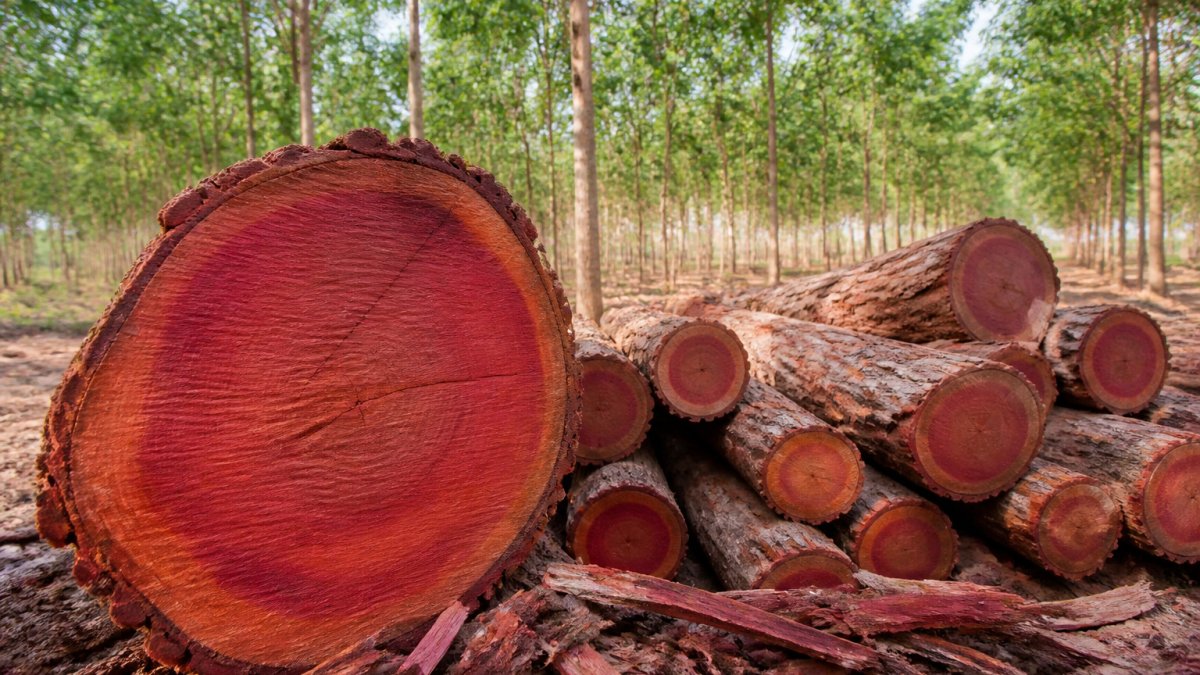
Last Updated: October 30, 2026
Quick Summary
Red sandalwood takes many decades to mature, and sources disagree because they define maturity differently. Quality heartwood typically begins forming around years 8 to 12, while full maturity and best yield are often placed at roughly 25 years or more. Always check the definition used.
- Quality heartwood formation is often reported between years 8 and 12.
- Many sources place full maturity and best yield at about 25 years or more.
- Heartwood present does not mean the tree is ready for commercial harvest.
- Check whether a maturity figure refers to heartwood, oil yield or full growth.
- Confirm any maturity claim is for red sandalwood, not Indian or white sandalwood.
Table of Contents
- Why Red Sandalwood Maturity Timelines Vary So Much
- Red Sandalwood Tree Growth Stages, Year by Year
- Red Sandalwood Harvest Age: Heartwood Versus Full Maturity
- Factors That Change How Fast Red Sandalwood Matures
- Red Sandalwood Cultivation Requirements That Affect Timber Quality
- Red Sandalwood Market Demand Forecast and What It Means for Timing
- Checking the Maturity Claims in a Red Sandalwood Investment Before You Commit
- Frequently Asked Questions
Red sandalwood is one of the most valuable timber species in the world, and its price is tied to demand from pharmaceutical, cosmetic and luxury buyers. Anyone thinking about it as a long-term asset eventually asks the same question: how long does red sandalwood take to mature? The honest answer is that sources disagree, and the reason is that they measure different things. RedGoldAgro publishes this guide to explain the timelines, separate biological growth from harvest readiness, and show how to check claims before committing money.
Why Red Sandalwood Maturity Timelines Vary So Much
Maturity has no single definition. Some sources mean the point when a tree first forms quality heartwood. Others mean full growth, or the point when the tree reaches its best oil yield. Each definition gives a different number of years.
Published sources put quality heartwood formation and full maturity at different points, so the two figures describe different endpoints. Both can be true, because they measure different things.
Many online sources blur these points together. That is why a figure quoted without a definition should be read with caution. Ask what "mature" means before comparing numbers.
Red Sandalwood Tree Growth Stages, Year by Year
Growth is gradual, so it helps to think in stages rather than one finish line. The stages below are a practical way to organize the timeline for red sandalwood (Pterocarpus santalinus), distinguishing it from aromatic white sandalwood (Santalum album). The exact timing varies by site, rainfall, soil and care, but this year-by-year breakdown gives growers and investors a concrete framework.
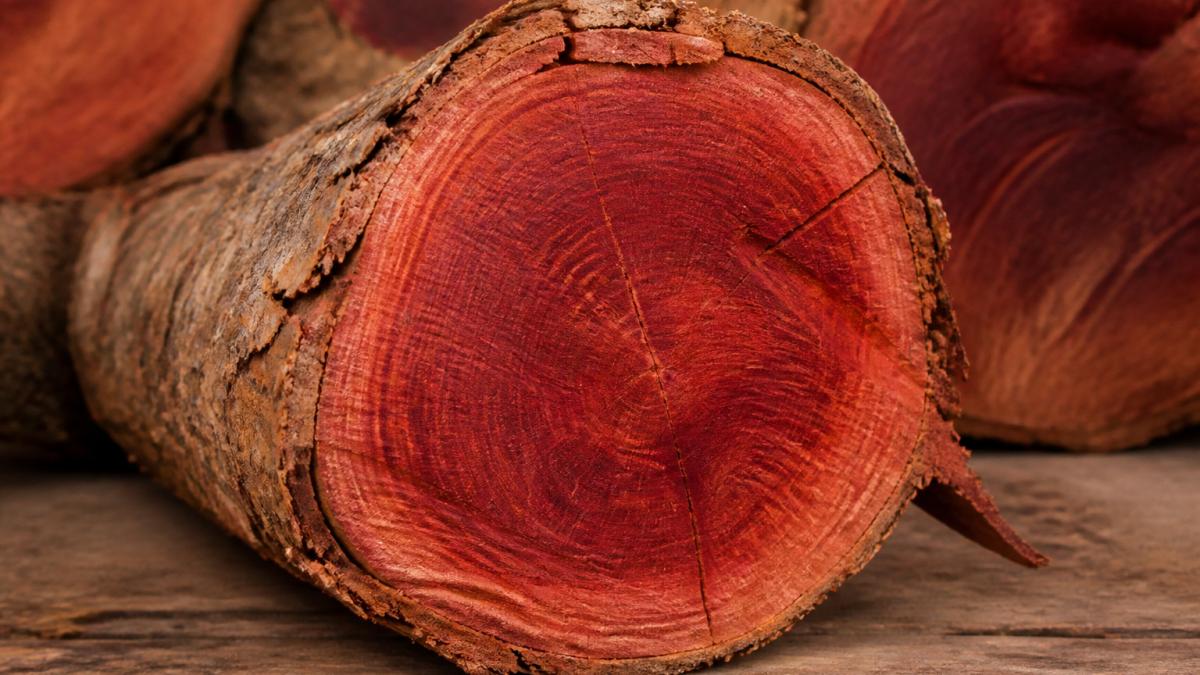
- Years 1 to 3, Establishment: Seedlings develop root systems and put on modest top growth. Red sandalwood is slow to establish compared to many tropical species. During this phase, consistent moisture and protection from browsing animals are critical. Host plants should already be in place if using a parasitic system, though red sandalwood is less dependent on hosts than white sandalwood.
- Years 4 to 7, Juvenile growth: The trunk thickens and the crown expands. Early heartwood formation may begin in this window, but it is not yet commercially significant. Trees are still vulnerable to drought and competition.
- Years 8 to 12, Heartwood initiation and early quality: This is when many red sandalwood-focused sources report the formation of quality heartwood. The distinctive red color develops as the tree ages. However, this does not mean the tree is ready for harvest, heartwood volume is still limited.
- Years 13 to 20, Heartwood maturation: Heartwood continues to darken and expand. Trees gain height and girth. This is the period when growers often begin to assess whether trees are on track for commercial harvest. Thinning may be considered if spacing was tight.
- Years 20 to 25+, Full maturity and optimal yield: Many sources place full maturity and best yield at roughly 25 years or more. At this stage, heartwood occupies a substantial portion of the trunk, and oil content (if relevant) is at its peak. Harvest eligibility depends on applicable legal regulations.
Treat these ranges as guides, not guarantees. Individual trees can run faster or slower depending on genetics, climate, and management. The key takeaway is that red sandalwood maturity is not a single date, it is a progression from biological establishment to commercial readiness.
Pro Tip Keep a written log of planting dates, host plant status, and any heartwood indicators (like trunk diameter) to track progress against these stages.Red Sandalwood Harvest Age: Heartwood Versus Full Maturity
Harvest readiness and full maturity are not the same. A tree can have usable heartwood well before it reaches its peak. Commercial decisions usually depend on which of these the buyer or grower is measuring.
Indian sandalwood is a different species, and its figures should not be applied to red sandalwood. Mixing species is one of the most common causes of confusion in this topic.
When you read a harvest age, check three things: the species, the definition of maturity, and whether the figure refers to heartwood, oil or full growth.
Factors That Change How Fast Red Sandalwood Matures
Several conditions shape the timeline. The main ones are:
- Climate and rainfall: Dry, well-drained conditions with reliable water support steady growth.
- Soil: Sandy or red soils that drain well tend to suit the species better than waterlogged ground.
- Host plants: Sandalwood is partly parasitic and needs suitable host plants nearby to grow well.
- Seed and seedling quality: Healthy, well-branched seedlings give a better start than weak stock.
- Site care: Protection from theft, pests and browsing affects survival over decades.
Illegal harvesting and habitat loss are recognized risks to sandalwood, and they can disrupt growth on paper-planned timelines.
Red Sandalwood Cultivation Requirements That Affect Timber Quality
Timber quality depends on the same care that drives growth. Good planting starts with site selection, planting spacing and seedling preparation. Poor early choices are hard to correct later.
A simple checklist for growers and investors:
- Confirm the site has suitable soil drainage and rainfall.
- Use healthy seedlings with strong root systems.
- Plan spacing so trees and their host plants have room.
- Set up irrigation during the establishment years.
- Keep written records of planting dates and tree care.
Quality heartwood cannot be rushed. Growers who focus on the first decade of care usually give their trees the best chance of a strong result.
Red Sandalwood Market Demand Forecast and What It Means for Timing
Demand for red sandalwood is driven by its use in luxury goods, traditional medicine, and cosmetics, and by the scarcity of mature timber. Unlike many commodities, red sandalwood supply is constrained by biology: trees take decades to mature, and harvesting is often regulated. This creates a unique market dynamic where demand forecasts must be read alongside legal and biological timelines.
Several factors are expected to shape demand in the coming years:
- Scarcity and exclusivity: As wild populations decline and regulations tighten, legally sourced red sandalwood becomes rarer. This supports price premiums for verified, sustainable supplies.
- Cosmetic and pharmaceutical demand: Red sandalwood is valued in skincare and traditional remedies. Growing interest in natural ingredients in the United States and other markets may sustain demand.
- Luxury and cultural uses: In some cultures, red sandalwood is used in fine furniture, carvings, and religious items. Demand from these segments is relatively inelastic but sensitive to economic conditions.
- Regulatory influence: Red sandalwood trade is subject to international regulation, so buyers may prefer sources that can document legal harvest.
The research available for this article does not include verified demand figures for coming years, so we are not presenting specific projections here. What the timeline tells us is simple: because maturity takes at least a decade and often much longer, any investment is a bet on demand many years out. Anyone looking at forecasts should ask who published them, what data they used, and whether they were published recently. For a broader view of investment options and project checks, the 7 Charan Group vs Rudraa Sandan Project Checks Every NRI Needs guide is a useful starting point before you commit.
Key Takeaway The long maturity of red sandalwood means that today's planting decisions are effectively forecasts of demand 20+ years from now. Growers should monitor regulatory changes and end-use trends, not just spot prices.The article's demand discussion turns on a few key drivers and the regulatory and timing constraints that shape them.
| Demand driver | Effect on demand | Note |
|---|---|---|
| Scarcity and exclusivity | Supports price premiums | Tied to declining wild populations |
| Cosmetic and pharmaceutical use | May sustain demand | Growing interest in natural ingredients |
| Luxury and cultural uses | Relatively inelastic | Sensitive to economic conditions |
| Regulatory influence | Favours documented legal sources | Subject to international trade rules |
| Maturity timeline | Demand bet 20+ years out | Maturity takes at least a decade |
Checking the Maturity Claims in a Red Sandalwood Investment Before You Commit
Investment pitches often quote a single maturity figure. Before you rely on one, check the following:
- Species: Is the figure for red sandalwood, or for another sandalwood?
- Definition: Does "mature" mean heartwood, oil yield or full growth?
- Source: Is the number from a published study or from the seller's own marketing?
- Timing of returns: When does harvest income actually start, and what happens if trees grow slower than planned?
Compare how different red sandalwood investment companies describe their timelines and documentation, and ask for the same definitions from each. Pricing depends on the plot, the number of trees and the terms of the agreement, so request current figures and a written quote directly from RedGoldAgro. If you are ready to move forward, the step-by-step guide to investing in red sandalwood farmland explains each stage. Before any enquiry, review the NRI checklist for farmland enquiries, which covers eligibility, title documents and payment questions to raise with independent advisers.
Maturity timelines are the foundation of any red sandalwood decision. Know the definition, check the species, and verify the source before you accept any number.
Frequently Asked Questions
How many years does red sandalwood take to mature?
Published sources give different answers because they measure different things. Published sources give different answers because they measure different things, with quality heartwood and full maturity typically reached at different points. Investors should treat the early heartwood figure and the full maturity figure as separate milestones and ask which one a project's timeline is based on.
At what age can red sandalwood trees be harvested?
Harvest readiness depends on the goal. Quality heartwood and full maturity occur at different points, and harvest timing should follow the tree's condition and the plantation plan. Harvest timing should follow the tree's condition and the plantation plan rather than a single fixed age, so ask any operator to explain how they define harvest readiness.
What should investors verify before investing in a red sandalwood plantation?
Ask for the maturity timeline in writing and confirm whether it refers to heartwood formation or full maturity. Review land documentation, tree registration records, the yield-sharing terms, and the security and maintenance arrangements. Check the operator's company registration and ask how returns are calculated if trees mature later than planned or market prices change.
Download NRI Guide Add redgoldagro.com as a preferred source on Google →