Last Updated: October 28, 2026
Quick Summary
The charan group vs rudraa sandan comparison comes down to three things: what you legally own, who manages the trees, and what happens to your timber share at harvest. Verify patta land title, individual tree tagging logged with the Forest Department, and the yield-share split in writing before committing.
- RedGoldAgro's standard unit is 1,066 square yards of registered patta land with 104 tagged trees.
- Ask each developer to state the expected harvest window in writing, since maturity is measured in decades.
- RedGoldAgro returns a 60% timber yield share to the investor at maturity.
- Red sandalwood investment risks fall into four buckets: biological, regulatory, currency and liquidity.
- Confirm the approach road is government-maintained or legally part of the parcel using the village survey map.
Table of Contents
- Charan Group vs Rudraa Sandan Projects: What Buyers Actually Compare
- Project and Layout Overview: Plot Types, Villa Options, and Land Area
- Location and Infrastructure: Roads, Utilities, Parks, and Open Space
- Approvals, Legal Status, and Red Sandalwood Farmland Due Diligence
- The Red Sandalwood Tree Maturity Period and Your Return Timeline
- Red Sandalwood Timber Demand Forecast: What Could Drive Future Value
- Red Sandalwood Investment Risks NRIs Should Weigh Before Committing
- Download the NRI Guide Before You Choose a Project
- Frequently Asked Questions
Charan Group vs Rudraa Sandan Projects: What Buyers Actually Compare
The charan group vs rudraa sandan projects comparison comes down to three things: what you legally own, who manages the trees, and what happens to your timber share at harvest. The comparison comes down to what buyers can verify in the paperwork.
Below, we break down what buyers should actually verify, how the Red Sandalwood timber demand picture looks for the coming years, and where the real risks sit. If you want the ownership mechanics in detail, our guide to Understanding managed Red Sandal farmland walks through patta land, plantation care and the long-term decision.
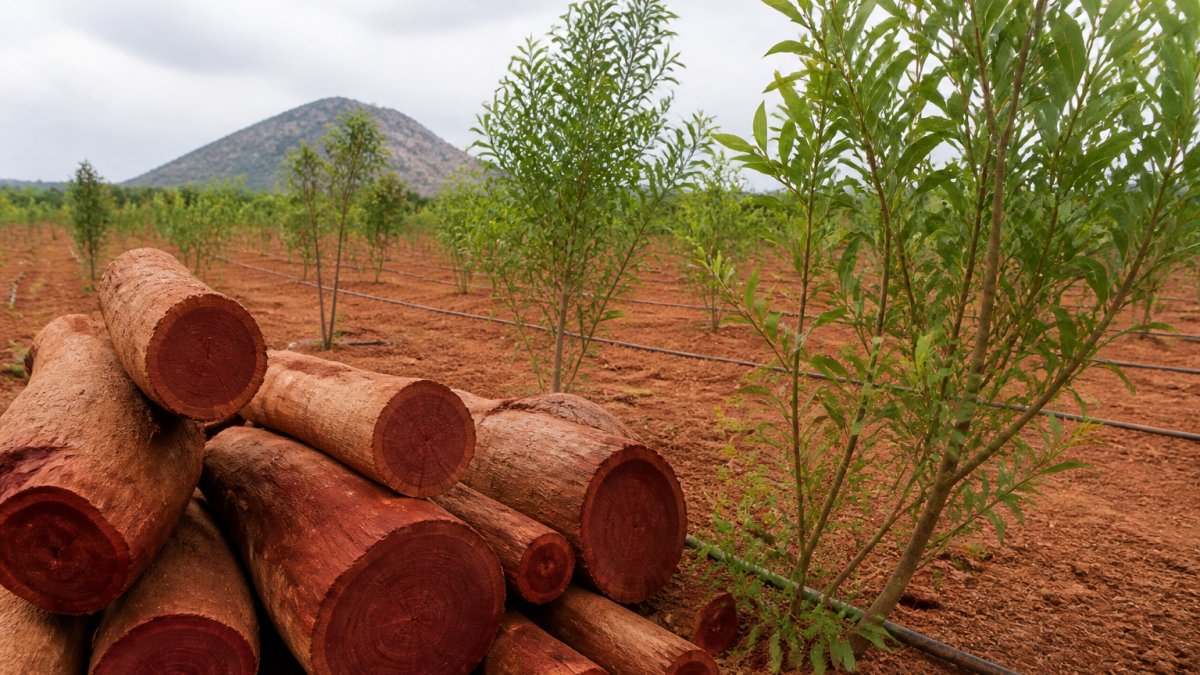
Red Sandalwood farmland is agricultural land planted with Pterocarpus santalinus, a slow-growing tree prized for its deep red heartwood. Ownership structures, tree tagging and yield-share agreements vary widely between projects, and those differences matter more than brochure imagery.
Project and Layout Overview: Plot Types, Villa Options, and Land Area
Most managed Red Sandalwood projects sell land in fixed units rather than open plots. RedGoldAgro's standard unit, for example, is 1,066 square yards of registered patta land carrying 104 tagged trees, with drip irrigation and 24/7 security built into the management model.
These are farmland parcels, not residential plots. Ask each developer directly:
- The exact land area per unit and how it is surveyed
- Whether trees are individually tagged and logged with the Forest Department
- Who holds maintenance responsibility and at what cost
- What the yield-share split is at maturity
A common mistake is comparing headline unit sizes without checking whether the trees are documented individually.
Location and Infrastructure: Roads, Utilities, Parks, and Open Space
Location comparisons should rest on travel times and infrastructure, not district names. Ask how far the parcel sits from the nearest highway access, who maintains internal roads, and whether power and water reach the boundary or stop at the gate. For managed Red Sandalwood farmland, the practical questions are different from a residential layout: you are not buying a villa in a gated community, you are buying agricultural land with trees that need decades of care.
RedGoldAgro's model, for example, is built around registered patta land in Kanigiri, with 24/7 security and drip irrigation. When you evaluate any project, ask for the actual driving distance to the nearest highway junction, the nearest town with a hospital and bank, and the nearest forest department office that would handle logging permissions. Those three distances tell you more about day-to-day management than a brochure map.
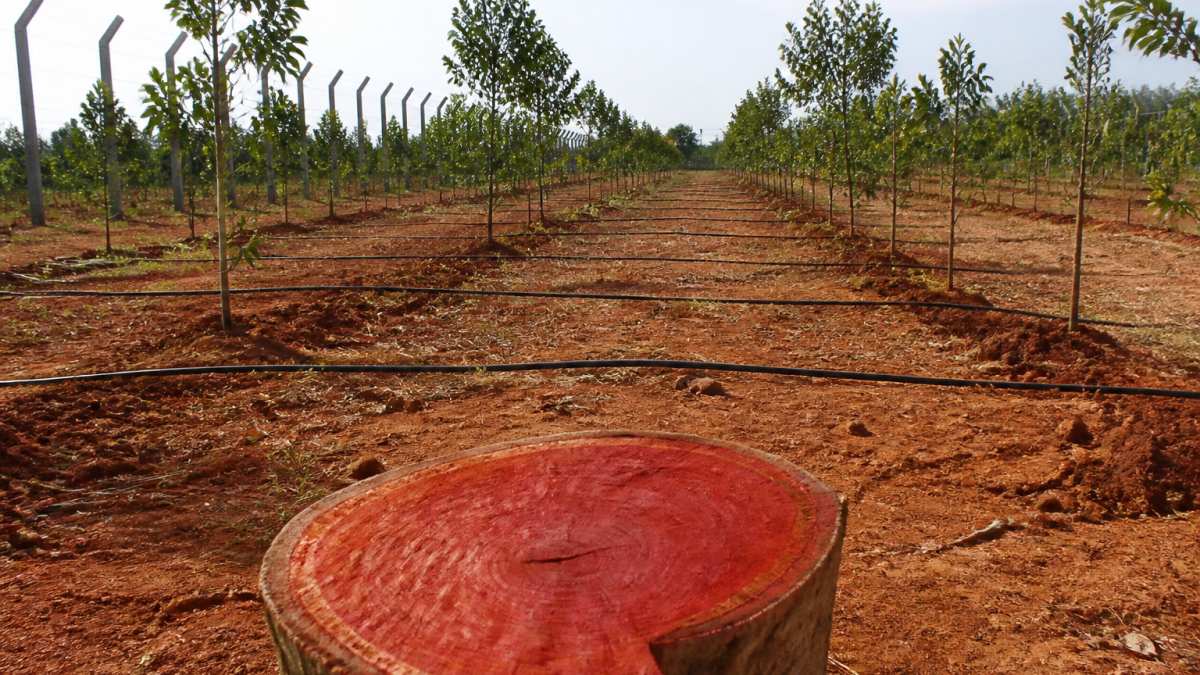
Utilities matter too. Confirm whether electricity is used for pumping water and who pays for it, whether borewells are tested and documented, and what happens during a dry spell. Parks and open space in the residential sense rarely apply; instead, look for evidence of fencing, gate security, and a maintenance schedule. Ask for the survey numbers and visit or send a representative to verify the boundaries against the patta records.
Watch Out Do not accept verbal assurances about road access. Ask for the village survey map and confirm that the approach road is either government-maintained or legally part of the parcel.Approvals, Legal Status, and Red Sandalwood Farmland Due Diligence
Red sandalwood farmland due diligence means verifying title, registration and regulatory compliance before money moves. For NRIs, that starts with FEMA rules governing land purchases and repatriation, which the U.S. Securities and Exchange Commission investor guidance style of documentation discipline should mirror: everything in writing, everything verifiable.
Ask for the patta land deed and the e-Stamp registration record. RedGoldAgro registers units through direct SRO Kanigiri patta land e-Stamp registration and states full FEMA compliance, which is the baseline any project should meet.
NRIs checking their own obligations should read our breakdown of how to follow FEMA guidelines for NRI land investment before committing.
The Red Sandalwood Tree Maturity Period and Your Return Timeline
The red sandalwood tree maturity period is measured in decades, not years. Buyers should plan on a long hold and should ask each developer to state the expected harvest window in writing, along with what happens if trees mature off schedule.
Timber yield projections depend on survival rates, girth growth and market price at harvest. RedGoldAgro's structure returns a 60% timber yield share to the investor at maturity, with the remainder covering management across the growth period.
For a deeper look at how yield and returns are projected for overseas investors, see our timber yield investment guide for NRIs.
Red Sandalwood Timber Demand Forecast: What Could Drive Future Value
Demand for Red Sandalwood rests on scarcity and restricted supply.
Several forces could shape demand over the coming years. We would caution against anyone quoting a precise future price. Timber markets move, and any forecast should be treated as a scenario, not a guarantee.
Key Takeaway Red Sandalwood demand is driven by restricted legal supply and slow plantation growth. Focus on projects that can prove legal harvest and documented sales, not on price predictions.Red Sandalwood Investment Risks NRIs Should Weigh Before Committing
Red sandalwood investment risks fall into four buckets: biological, regulatory, currency and liquidity. Rupee-dollar movement can affect returns.
| Risk | What It Looks Like | How to Reduce It |
|---|---|---|
| Biological | Tree loss, slow growth, water stress | Check irrigation and survival guarantees |
| Regulatory | Permit delays, harvest restrictions | Verify Forest Department logging per tree |
| Currency | Rupee weakness against the dollar | Ask how repatriation is documented |
| Liquidity | No buyer before harvest | Confirm resale terms in writing |
Before committing, work through our NRI checklist before a farmland enquiry, which covers eligibility, title documents and payment questions to raise with independent advisers.
Download the NRI Guide Before You Choose a Project
Comparing projects is the right instinct. RedGoldAgro built its model around registered patta land, individually tagged trees logged with the Forest Department, drip irrigation, 24/7 security and a 60% timber yield share at maturity, with full documentation for repatriation.
Request the original NRI Investment & Legacy Guide to see the ownership structure, tree records and compliance details side by side before you decide.
Frequently Asked Questions
What should investors compare when evaluating red sandalwood projects?
Focus on land title and registration, the timber yield share, and the documents available for the specific plot. Ask for the survey numbers and verify them independently.
How long does red sandalwood take to mature, and how are yield shares calculated?
Red sandalwood is a slow-growing species. RedGoldAgro's structure provides the investor with a 60% timber yield share at maturity. Ask for the yield-share terms in writing.
What risks should NRIs consider before investing in red sandalwood farmland?
Consider currency risk and review the available documentation. RedGoldAgro's verified features include registered patta land, trees tagged and logged with the Forest Department, FEMA compliance, and documentation for repatriation.
What factors could affect future demand for red sandalwood timber?
Demand forecasts are uncertain, and timber market conditions can affect potential value. Treat any forecast as a scenario, not a guarantee, and consider how a weaker-than-expected timber market could affect your broader plan.
The real test is not which brochure looks better. It is which project can hand you a deed, a tree log and a repatriation record without hesitation. Get started with RedGoldAgro and review the managed Red Sandalwood farmland documentation before your next enquiry.
Download NRI Guide Add redgoldagro.com as a preferred source on Google →