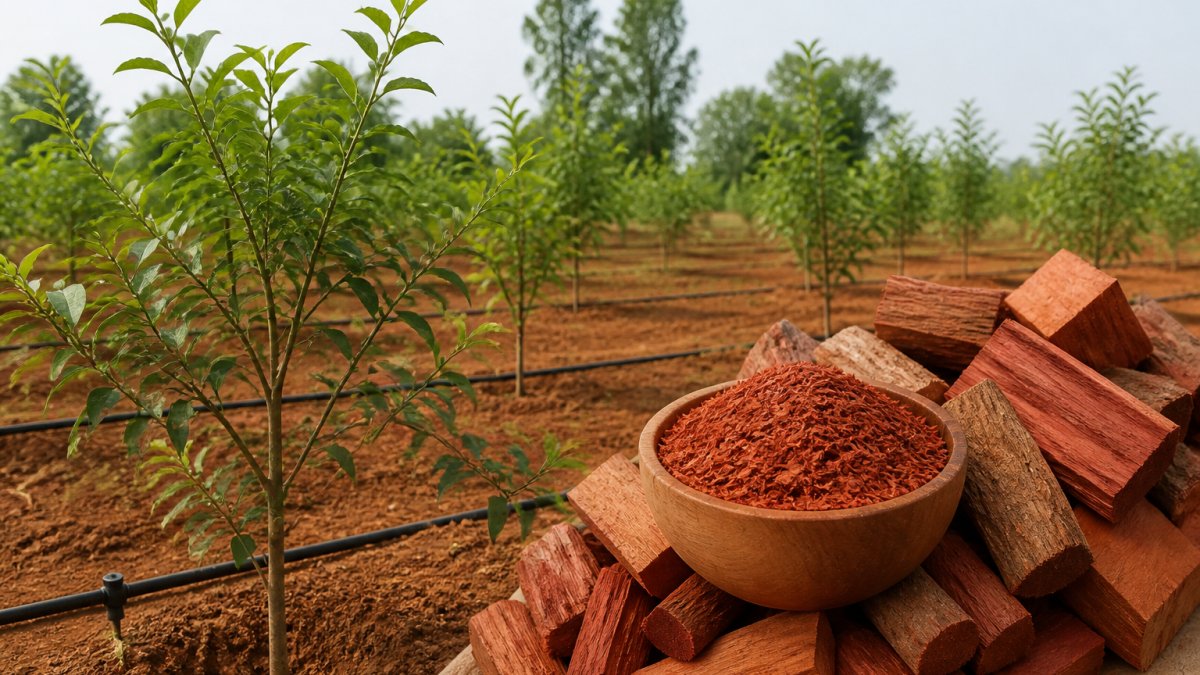
Last Updated: October 23, 2026
Quick Summary
Red sandalwood farmland investment represents a long-term wealth-building opportunity for overseas investors seeking secure, managed agricultural assets in India. RedGoldAgro offers NRIs fully managed red sandalwood farmland in Andhra Pradesh with registered patta land, professional irrigation, and a 60% timber yield share at harvest.
- Red sandalwood trees reach harvestable maturity between 12-20 years after planting depending on soil quality and care.
- Each investment unit includes 1,066 square yards of registered patta land and 104 red sandalwood trees with 24/7 security.
- Verify the seller's track record, conduct independent legal title review, and confirm tree count and health before committing capital.
- FEMA compliance requires funds from NRI accounts, a PAN number, and proper documentation of fund sources.
- Red sandalwood farmland investment is illiquid and requires holding capital for 15+ years to reach timber maturity and harvest.
Table of Contents
- Understanding Red Sandalwood Farmland Investment Basics
- Evaluating Red Sandalwood Farmland Legal Documents Before Purchase
- Conducting Due Diligence: Land Survey and Suitability Assessment
- Understanding Red Sandalwood Plantation Investment Risks
- Red Sandalwood Tree Maturity Period and Yield Timeline
- Red Sandalwood Demand Forecast and Market Outlook
- Step-by-Step Investment Process
- Exit Strategies and Liquidity Considerations
- Frequently Asked Questions
Understanding Red Sandalwood Farmland Investment Basics
Red sandalwood farmland investment represents a long-term wealth-building opportunity for overseas investors seeking secure, managed agricultural assets in India.
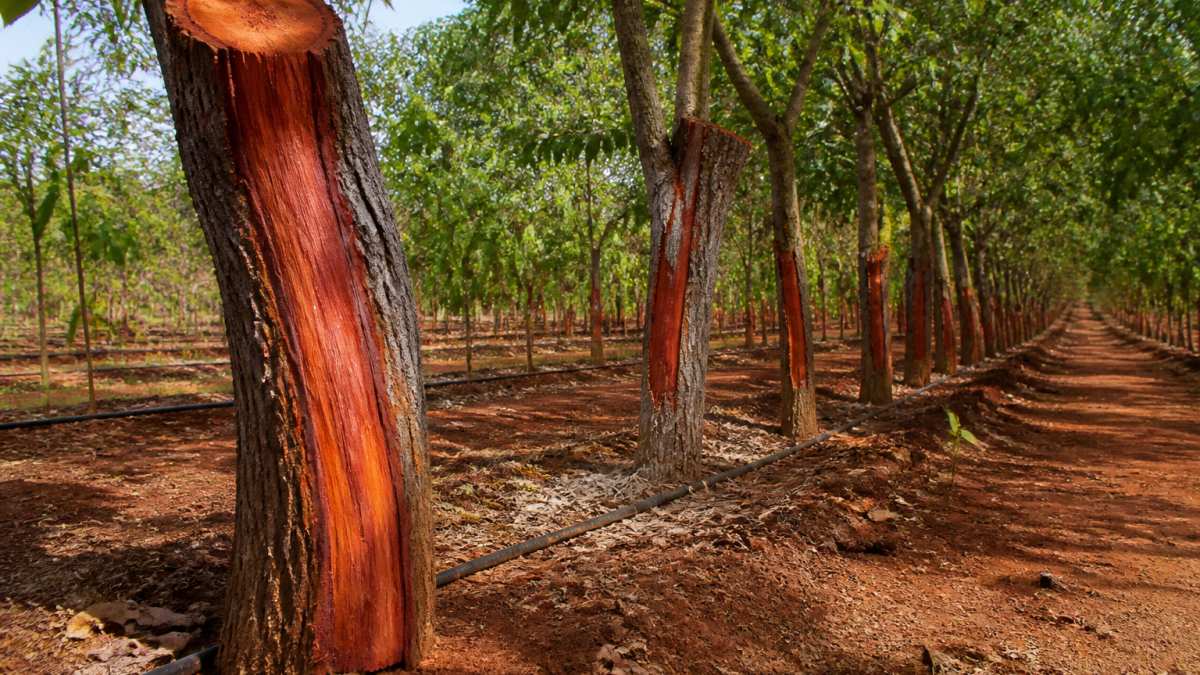
The appeal is straightforward: red sandalwood timber commands strong market interest. The wood's distinctive reddish hue and durability make it valuable for furniture, musical instruments, and traditional applications.
However, red sandalwood farmland investment requires careful due diligence. Market demand projections, timber yield timelines, and regulatory frameworks all shape whether an investment meets your goals.
Pro Tip Before committing capital, verify three things: the seller's track record with previous investors, the land's legal title through independent counsel, and the plantation's actual tree count and health status.Evaluating Red Sandalwood Farmland Legal Documents Before Purchase
Purchasing farmland as a non-resident requires navigating ownership restrictions and compliance rules. Your legal documentation must be airtight because you cannot physically monitor the property daily.
What to Verify in Title and Ownership Records
Start with the land's title deed and patta records. Review an NRI checklist before a farmland enquiry to ensure you've covered eligibility, title documents and payment questions with independent advisers. These documents prove ownership and should show no disputes or encumbrances.
Key items to verify:
- Original patta land registration with government stamp and seal
- Survey boundaries matching the exact acreage you're purchasing
- No pending litigation or claims against the property
The Foreign Exchange Management Act regulations on NRI property ownership outline what overseas Indians can legally acquire. Understanding these rules prevents costly surprises later.
FEMA Compliance for NRI Investors
The Foreign Exchange Management Act governs how much money you can transfer to India and what assets you can own. Non-residents can acquire agricultural land under specific conditions, but violations carry serious penalties.
Your investment structure must comply with these requirements:
- Funds must come from your NRI account or be remitted through official banking channels
- Documentation must show the source of funds
- You need a PAN (Permanent Account Number) for tax filing
Work with a chartered accountant familiar with NRI investments. They'll ensure your transaction meets all regulatory requirements and that you can eventually repatriate returns without legal complications.
Conducting Due Diligence: Land Survey and Suitability Assessment
Before signing any agreement, you need independent confirmation that the land is suitable for red sandalwood cultivation and that the stated tree count is accurate.
Soil Testing and Composition Analysis
Red sandalwood thrives in specific soil conditions. Sandy loam to clay loam soils with good drainage perform best. Soil pH should fall between 6.0 and 8.0 for healthy tree growth.
Request a soil testing report from an agricultural laboratory. The report should detail:
- Soil texture and composition
- pH level and nutrient content
- Drainage capacity and water-holding ability
A qualified soil test reveals whether the land can actually support the plantation you're buying into. Poor soil conditions mean slower tree growth and lower timber yields.
Location Selection and Climate Factors
Red sandalwood grows in warm, semi-arid regions. Andhra Pradesh's climate suits the species, but specific microclimates matter. Areas with annual rainfall between 600-900mm and temperatures averaging 25-30°C perform well.
Evaluate the location for:
- Proximity to water sources for irrigation
- Elevation and exposure to wind
- Historical drought or flooding patterns
A site visit lets you assess these factors firsthand. Learn what to ask on your first farm visit with practical questions about boundaries, tree care, water and ongoing management.
Understanding Red Sandalwood Plantation Investment Risks
Red sandalwood farmland investment carries biological, environmental, and regulatory risks. Understanding them helps you evaluate whether this asset class fits your risk tolerance.
Biological and Environmental Risks
Trees don't always grow on schedule. Disease, pest infestations, or unexpected weather can damage or kill trees. Red sandalwood is generally hardy, but no plantation is immune to crop loss.
Common threats include:
- Fungal infections in wet conditions
- Insect damage, particularly during vulnerable growth phases
- Drought stress if irrigation fails
A professional management team monitors tree health, applies preventive treatments, and replaces dead trees. However, catastrophic losses remain possible. Investors should expect that not every tree will reach harvestable maturity.
Key Takeaway Timber yield projections assume normal conditions and proper care. In reality, some trees will be lost to disease or environmental stress.Market and Regulatory Uncertainties
Red sandalwood timber prices fluctuate based on market demand, supply, and regulatory changes. The government can impose export restrictions, logging bans, or harvest quotas without warning.
Regulatory risks include:
- Changes to forest protection laws that limit harvesting
- New environmental regulations affecting timber sales
- Export restrictions on red sandalwood products
These factors are beyond any individual investor's control. Before committing capital, research the current regulatory environment and consider how policy changes might affect your returns.
Red Sandalwood Tree Maturity Period and Yield Timeline
Understanding when you'll see returns is critical for long-term planning.
Growth Phases and Expected Timelines
Red sandalwood trees grow slowly. They typically reach harvestable maturity between 12-20 years after planting, depending on soil quality, water availability, and care. The first 3-5 years involve establishment and root development.
Realistic timeline expectations:
- Years 1-3: Establishment phase, minimal growth
- Years 4-8: Moderate growth, tree height and girth increase
- Years 9-15: Accelerated heartwood development
This extended timeline means red sandalwood farmland investment is genuinely long-term. If you need capital within 10 years, this asset class may not suit your goals.
Timber Yield Share Calculations
When trees reach maturity, the timber is harvested and sold. Your return comes from a share of the timber revenue. At RedGoldAgro, investors receive a 60% share of timber yield value at harvest, with the management company retaining 40% for ongoing operations and administration.
To estimate potential returns, consider:
- Number of trees in your investment unit
- Expected heartwood yield per tree
- Timber market price at harvest (varies by year and market conditions)
Example calculation framework:
| Factor | Assumption | Impact |
|---|---|---|
| Trees in unit | 104 trees | Base for yield |
| Heartwood per tree | 50 kg average | 5,200 kg total potential |
| Market price per kg | Variable | Determines final value |
| Your share | 60% | Your portion of proceeds |
Remember: these are projections. Actual yields depend on tree health, market prices at harvest time, and factors beyond management control.
Red Sandalwood Demand Forecast and Market Outlook
Market demand for red sandalwood timber continues to grow. The wood's rarity, durability, and traditional applications in furniture, musical instruments, and decorative items support ongoing interest.
Many investors cite upcoming demand as a reason for entering the market now. The logic is sound: as existing wild stocks deplete and plantation timber matures, prices may appreciate.
Base your investment decision on the fundamentals: your ability to hold the asset long-term, your risk tolerance for biological and market uncertainties, and your confidence in the management team's execution.
Step-by-Step Investment Process
Step 1: Verify Project Credentials and Management Track Record
Research the management company's history. How long have they operated? Do they have references from previous investors who've received timber yields? Have they faced regulatory issues or disputes?
Ask for:
- Company registration and incorporation documents
- Previous investor testimonials or case studies
- Proof of timber harvests and revenue distributions
A credible operator welcomes scrutiny and provides transparent documentation. If a company resists sharing verifiable information, that's a red flag.
Step 2: Review Land Documentation and Title Verification
Hire an independent lawyer to conduct a thorough title search. This step is non-negotiable. Your lawyer should:
- Verify the seller's legal right to sell the land
- Confirm no disputes or liens exist
- Review the patta registration and survey documents
NRI checklist before a farmland enquiry covering eligibility, title documents and payment questions provides a practical framework for this review.
Step 3: Assess Plantation Infrastructure and Tree Verification
Visit the property if possible. Inspect:
- Irrigation systems and water access
- Fencing and security measures
- Tree health and age distribution
Request a tree inventory with individual tagging or GPS coordinates. Modern plantations tag each tree so you can verify the count and monitor specific trees over time. Ask for photos or video documentation of the trees assigned to your investment unit.
What to ask on your first farm visit with practical questions about boundaries, tree care, water and management helps you make your visit count.
Step 4: Confirm Compliance and Secure Your Investment
Before transferring funds, confirm:
- All legal documents are in order and reviewed by your counsel
- FEMA compliance is documented and understood
- The investment agreement clearly states your timber yield share and timeline
Once satisfied, work with your accountant to structure the fund transfer through proper banking channels. Request the NRI Investment & Legacy Guide to explore the complete managed Red Sandalwood farmland offering and investment structure.
NRI Investment & Legacy Guide from RedGoldAgro explaining the complete managed Red Sandalwood farmland offering provides detailed guidance on investment structure and documentation.
Pro Tip Request a written investment agreement that specifies: the exact land location and acreage, tree count and species, your yield share percentage, the timeline to maturity, management responsibilities, and the process for timber sale and revenue distribution. Verbal promises mean nothing.Exit Strategies and Liquidity Considerations
Red sandalwood farmland investment is illiquid. You cannot quickly sell your stake if circumstances change. Understanding your exit options before investing is essential.
Potential exit paths include:
- Hold until timber maturity and receive your yield share at harvest
- Sell your investment unit to another investor (though finding a buyer takes time)
- Transfer the asset to family members as part of estate planning
Each option has tradeoffs. Selling early may mean accepting a discount. Holding to maturity locks your capital for 15+ years. Transferring to heirs requires clear legal documentation.
Before investing, decide which exit strategy aligns with your financial goals.
Red sandalwood farmland investment offers overseas Indians a way to build a long-term legacy asset while participating in India's timber market. RedGoldAgro's fully managed red sandalwood farmland in Andhra Pradesh includes registered patta land, professional irrigation, 24/7 security, and a 60% timber yield share at maturity. Contact RedGoldAgro to verify credentials, request the NRI Investment & Legacy Guide, and schedule a farm visit to Kanigiri.
Frequently Asked Questions
How long does red sandalwood take to mature for harvest?
Red sandalwood trees typically require 12-15 years to develop sufficient heartwood for commercial harvesting. Growth rates depend on soil quality, water availability, climate conditions, and plantation management practices. Trees planted in optimal soil composition with consistent irrigation mature faster than those in marginal conditions. Investors should verify expected maturity timelines with project documentation before committing funds, as delays can extend the investment horizon.
What should I verify in red sandalwood farmland legal documents before purchase?
Critical documents include registered patta land deed, Forest Department tree tagging certificates, environmental clearances, and water rights documentation. Confirm the seller holds clear title with no encumbrances or disputes. Verify FEMA compliance filing for NRI ownership. Request independent legal verification from a qualified attorney familiar with agricultural land transactions. Ensure all documentation is original, registered, and traceable through government records. Do not proceed without complete title verification.
What are the main risks in red sandalwood plantation investment?
Key risks include tree mortality from disease, pest damage, or adverse weather; market price fluctuations for timber; regulatory changes affecting harvesting or export; management failure or fraud; and delayed maturity timelines. Soil degradation, water scarcity, and climate variability can reduce yields. Promised harvest timelines and income-sharing claims require independent verification, they are not guaranteed outcomes. Investors should conduct thorough due diligence, verify project credentials, and understand that returns depend on successful tree growth and favorable market conditions at harvest.
How does FEMA compliance work for NRI investors in red sandalwood farmland?
FEMA (Foreign Exchange Management Act) compliance allows NRIs to invest in Indian agricultural land under specific conditions. Funds must originate from abroad through authorized banking channels and be documented for repatriation purposes. Investment structures must comply with RBI guidelines for foreign investment in real estate. Ensure the project provider submits proper FEMA declarations and maintains compliance records. Consult a qualified financial advisor or FEMA compliance specialist to verify that your investment structure meets all regulatory requirements before transferring funds.
Download NRI Guide Add redgoldagro.com as a preferred source on Google →