Last Updated: October 29, 2026
Quick Summary
To compare red sandalwood investment companies, verify land title and ownership documents first, then check legal compliance and FEMA eligibility. Next, compare yield terms, maturity timelines, and fees, and confirm how exit and buy-back options work before maturity. Red sandalwood demand is projected to grow from $2.29 billion in 2026 to $3.54 billion by 2031.
- Request the registered patta or title deed and full ownership history for the specific land parcel.
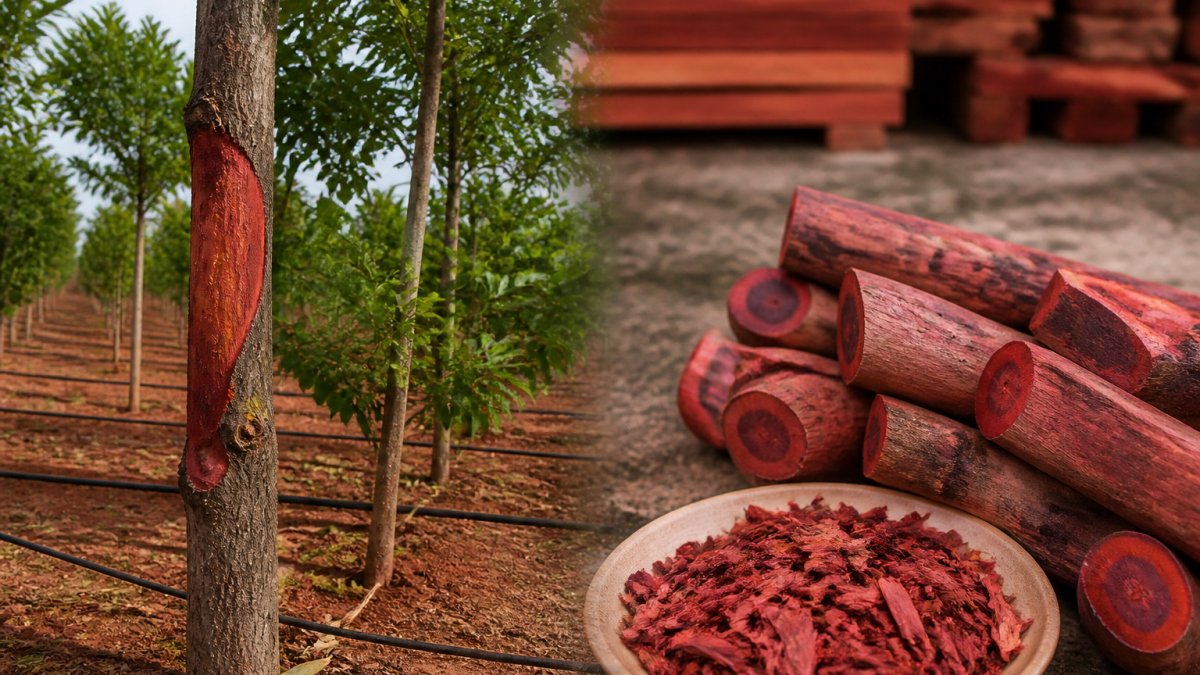
- Red sandalwood trees usually need 12 to 15 years to reach maturity, so be wary of faster promises.
- Ask for the exact FEMA structure and the professional who reviewed it, not a general compliance assurance.
- Get management fees, harvest fees, and exit fees itemized separately from the return projection.
- Treat exit and buy-back terms as a deal-breaker if no realistic liquidity path exists before year 15.
Table of Contents
- Why Red Sandalwood Demand Matters for Your Comparison
- Step 1: Verify Land Title and Ownership Documents
- Step 2: Check Legal Compliance and FEMA Eligibility
- Step 3: Compare Yield Terms, Timelines, and Minimum Investment for Timber Plantations
- Step 4: Assess Red Sandalwood Investment Risks Before Committing
- Step 5: Evaluate Timber Farmland Management Services and Exit Options
- Requesting Documents and Next Steps Before You Invest
- Frequently Asked Questions
Why Red Sandalwood Demand Matters for Your Comparison
Red sandalwood is a high-value timber, and its demand shapes what any red sandalwood investment company can realistically deliver. Before you compare projects, it helps to understand the market they all depend on. The red sandalwood market is valued at $2.29 billion in 2026, according to Mordor Intelligence red sandalwood market report, and it is projected to reach $3.54 billion by 2031.
Strong demand gives a plantation business a reason to exist, but it does not guarantee any single company will perform well. For a closer look at managed Red Sandal farmland and the long-term questions behind it, see managed Red Sandal farmland.
Here is the practical takeaway. Use demand as a starting point, then test each company against the specifics below.
- Ask whether the company explains where its timber sells and why buyers want it.
- Check whether its return story depends on a single buyer or market.
- Compare how each company describes demand, and whether it backs the claim with data.
Keep in mind that a growing market can attract weak operators. Demand alone should never settle your decision.
Step 1: Verify Land Title and Ownership Documents
Start with the land itself. Ownership documents are the foundation of any farmland investment, and a company that cannot produce them clearly should be removed from your list immediately.
Industry guidance for investors points to three core checks: verifying land ownership and title history, assessing legal compliance, and reviewing how transparently the project is managed. Those three checks form the basis of a neutral due diligence process.
Ask each company for these documents:
- The registered patta or title deed for the specific land parcel
- Proof of the land's ownership history, including past transfers
- Evidence that the land is registered in the investor's name or a verified nominee's name
- The survey or boundary records for the plot
Compare the answers side by side. A reputable company will send these quickly and explain each one. Vague answers or delays are a warning sign.
Step 2: Check Legal Compliance and FEMA Eligibility
Legal compliance is where promotional pages get vague, and it is the single fastest way to separate a real operator from a brochure.
Start with the foreign-exchange framework. Agricultural land in India is generally off-limits to non-resident ownership, so any structure that lets you participate must route around that restriction through a permitted entity, a lease, or a managed-farmland arrangement.
Watch Out Do not accept a general assurance that a structure is "FEMA compliant." Ask for the specific entity type, the registration documents, and the name of the professional who reviewed the structure. Vague compliance claims are the most common red flag in this asset class.Put these document requests to every company on your shortlist:
- Entity and registration records. The incorporating documents, tax registration, and any foreign-investment approval for the entity that will hold your interest.
- Land registration and stamping. The registered sale deed, stamp-duty receipt, and encumbrance certificate for the specific parcel, not a sample from another project.
- Plantation and forest records. Proof that the sandalwood plantation is logged with the relevant forest authority, since red sandalwood is a restricted species and harvest and transport require government authorization.
- Repatriation path. A written explanation of how sale proceeds move from the project entity to your U.S. bank account, including which approvals are needed and who files them.
- Tax documentation. The forms and certificates the company will issue at harvest and at exit, and confirmation of how it reports income to U.S. investors.
Compare the answers line by line. A reputable operator will send the actual documents for your parcel within days and will explain each one. Delays, sample documents, or answers that shift between calls are disqualifying.
One more check that most buyers skip: confirm the company's own track record with regulators. Ask whether it or its principals have been the subject of any enforcement action, and verify the entity's registration independently rather than relying on a screenshot.
Finally, get independent review before you sign. A qualified advisor familiar with foreign investment in Indian agricultural land, plus a U.S. tax professional, should review the structure and the documents.
Step 3: Compare Yield Terms, Timelines, and Minimum Investment for Timber Plantations
This is where the numbers live, and it is where comparisons get tricky. Each company may describe its return differently, so line up the terms before you judge.
Red sandalwood trees usually need 12 to 15 years to reach maturity, according to Farmland Bazaar sandalwood maturity guide. Any company promising returns much sooner should prompt hard questions.
When you compare offers, record these details for each one:
- The timber yield share and how it is split at maturity
- The expected maturity timeline in years
- The minimum investment amount in USD
- Whether maintenance costs are deducted from returns, and how much
- What happens if trees mature late or yield less than expected
Make sure every figure is written into the contract. Verbal promises do not protect you.
Step 4: Assess Red Sandalwood Investment Risks Before Committing
No honest comparison skips risk. Red sandalwood is a long-term, high-investment crop, and that combination carries real downsides. The main risk is time. Your money stays locked up for many years, which may not suit investors who need liquidity.
Other risks to weigh include:
- Government-restricted trading. In some jurisdictions, sandalwood trade is restricted, so the government may be the only authorized buyer. That limits how and where a harvest can be sold.
- Exit liquidity. Selling a farmland unit before maturity may be difficult, and the buyer pool can be small.
- Price volatility. Timber prices can move over a 15-year horizon.
- Plantation loss. Pests, weather, and poor maintenance can reduce yield.
Ask each company how it addresses these risks. A company that names them openly is usually more trustworthy than one that calls its project risk-free.
Watch out: A promotional page that calls an investment the "best" option without independent figures is not evidence. Ask for the data behind the claim.
Step 5: Evaluate Timber Farmland Management Services and Exit Options
Management and exit are where the marketing stops and the contract starts. Most comparisons focus on projected returns and skip the two questions that determine whether you can actually get your money back: who maintains the trees, and who buys your position before maturity.
What management should cover
Get the service scope in writing and map it to a fee. A complete managed-farmland agreement should address:
- Silviculture. Planting density, thinning schedule, and soil management for the specific parcel.
- Irrigation and water rights. Who holds the water source, and what happens in a drought year.
- Pest and disease control. The protocol for sandalwood-specific threats.
- Security. How the parcel is protected against theft.
- Reporting. How often you receive growth and health updates, and whether an independent party verifies them.
- Insurance. Whether the trees and the land are insured, and for what perils.
Ask for the fee structure separately from the return projection. Management fees, harvest fees, and exit fees should each be itemized. A single blended "all-in" number hides where the money goes.
How exit actually works before maturity
This is the gap almost every promotional page skips. A 12-to-15-year timber cycle means your capital is illiquid for most of the holding period, and the secondary market for a fractional farmland interest is thin. Ask each company these questions and write the answers into the contract:
- Resale to another investor. Does the company operate or facilitate a secondary market? How many units changed hands in the last 12 months, and at what discount to the original price?
- Buy-back terms. Is there a company buy-back, at what price formula, and is it guaranteed or discretionary? A discretionary buy-back is not liquidity.
- Transfer mechanics. What does it cost and how long does it take to assign your interest to a buyer, and does the company have a right of first refusal?
- Harvest proceeds. If you hold to maturity, how and when are harvest proceeds distributed, and what is the repatriation timeline?
- Death and succession. What happens to your interest if you die before maturity, and can it pass to your heirs without triggering a forced sale?
Tax treatment of timber income
Tax is the second gap competitors ignore. Timber income can be treated differently depending on whether it is characterized as agricultural income, business income, or a capital gain on the sale of the land or the standing trees, and the U.S. side adds its own layer through foreign reporting and foreign tax credit rules. The characterization affects your effective return as much as the yield share does.
Ask each company what tax documents it issues at harvest and at exit, and confirm the characterization with a U.S. tax professional before you rely on any projected net return. Do not accept a company's own tax opinion as the final word.
The comparison table to build
For each company, record the management fee, the harvest fee, the exit fee, the buy-back terms, the secondary-market track record, and the tax documents it will issue. A company that answers all six clearly is rare, and that rarity is exactly why this step separates the shortlist from the marketing.
Requesting Documents and Next Steps Before You Invest
Once you have a shortlist, send each company the same written request. Ask for the land documents from Step 1, the legal compliance details from Step 2, the full yield and fee schedule from Step 3, the risk disclosures from Step 4, and the management and exit terms from Step 5.
Use a simple table to compare the responses:
| Criteria | What to Look For |
|---|---|
| Land title | Registered patta, clear ownership history |
| Legal compliance | Named FEMA process, proper registration |
| Yield terms | Written yield share and maturity timeline |
| Fees | Full maintenance and management costs disclosed |
| Exit options | Clear resale or buy-back terms |
Before you sign, have an independent advisor in India and a tax professional review the paperwork. You can also read RedGoldAgro's own documentation and ask for its current pricing and a quote directly from the company, since pricing depends on the specific unit, timing, and terms. Request the official NRI guide and the land documents from the RedGoldAgro website at redgoldagro.com before making any decision.
Frequently Asked Questions
What is the minimum investment for timber plantations?
Minimum investment figures vary by project, land size, and tree count, and RedGoldAgro has not published pricing in this comparison. Pricing depends on the specific investment terms and timing. Request a written quote and a full breakdown of what each offer includes from each company you compare. Compare those line items directly rather than the headline figure alone, and check the company's current pricing on its website or through a direct quote.
How do I verify the legal land ownership of a sandalwood plantation?
Ask for the registered land document and the title history, then confirm the seller's name matches the registered owner. Have a qualified attorney familiar with Indian property law review the documents before you pay. Confirm that any required cultivation permits are issued in the owner's name and remain valid for the full investment horizon.
What are the primary risks associated with red sandalwood investments?
The main risks are the long maturation period and the possibility of trading restrictions that can limit who may buy harvested timber. Market prices can also move, and returns depend on the timber yield share written into your contract. Liquidity is another concern, since selling a unit before maturity may be difficult. Review how each company handles delays, price drops, and early exit requests in writing.
Download NRI Guide Add redgoldagro.com as a preferred source on Google →