
Last Updated: October 26, 2026
Quick Summary
Agricultural land for sale in India is available through online platforms like 1acre, 2Bigha, and Farmland Bazaar, with South Indian states like Andhra Pradesh, Karnataka, and Tamil Nadu offering established legal frameworks for NRI purchases. NRIs must verify state-level restrictions, obtain SRO-registered deeds, ensure FEMA compliance, and conduct thorough title verification before investing.
- 1acre lists over 43,000 verified agricultural properties with 300+ map layers for comparative research
- South India dominates the NRI market, particularly Andhra Pradesh with transparent SRO registration systems
- Managed farmland models eliminate operational burden by providing professional oversight and regular yield reporting
- Title verification requires 12-13 years of ownership history, current encumbrance certificates, and mutation records
- State purchase rules vary dramatically; always verify current regulations with a local land attorney before committing
Table of Contents
- Agricultural Land for Sale in India: An Overview for NRI Investors
- NRI Agricultural Land Purchase Rules in India
- Key Regions and States Offering Agricultural Land
- How to Verify Land Title in India: Essential Due Diligence
- Agricultural Land Documents Checklist India
- Managed Farmland Investment India: Passive Ownership Models
- Comparing Platforms and Investment Options
- Start Your Agricultural Land Investment Journey
- Frequently Asked Questions
Agricultural Land for Sale in India: An Overview for NRI Investors
Non-resident Indians seeking long-term wealth creation are increasingly turning to agricultural land for sale in India as a stable, tangible asset class. Agricultural land accounted for 60.06% of India's land area in 2023 World Bank agricultural land data, making it a cornerstone of the economy and a compelling investment vehicle for diaspora investors.
Acquiring agricultural land requires understanding state-level purchase restrictions, verifying title documents, and structuring your investment for FEMA compliance and eventual repatriation.
This guide walks you through the key regions offering agricultural land, the legal framework governing NRI purchases, essential due diligence steps, and the emerging managed farmland model that eliminates the operational burden of remote ownership.
The agricultural land market in India has shifted dramatically over the past five years. Online marketplaces now present agricultural land through searchable listings and map-based evaluation tools. 1acre reports more than 43,000 verified lands with over 300 map layers 1acre verified land listings, while 2Bigha offers an interactive map for comparing locations, prices, and plot sizes. Farmland Bazaar describes listings for managed farmlands, agricultural land, estates, and farmhouses across India Farmland Bazaar marketplace.
This transparency has opened doors for NRI investors who previously relied on local agents or family connections. However, the same transparency also reveals a critical truth: purchase rules vary dramatically by state. A listing showing available land doesn't automatically mean a non-resident can legally purchase it.
| Platform | Coverage | Key Feature | Best For |
|---|---|---|---|
| 1acre | All-India | 43,000+ verified listings, 300+ map layers | Comparative research and valuation |
| 2Bigha | All-India | Interactive map with price and plot-size comparison | Location-based browsing |
| Farmland Bazaar | All-India | Managed farmland, estates, farmhouses | Buyers seeking managed properties |
| Gmore Valuation Tool | All-India | Free price-per-acre estimation | Quick market benchmarking |
NRI Agricultural Land Purchase Rules in India
The legal framework for NRI land ownership in India is governed by the Foreign Exchange Management Act (FEMA) and state-level agricultural land purchase restrictions.
A 2Bigha guide states that purchase rules differ by state and advises checking local regulations before buying 2Bigha state-by-state purchase guide.
FEMA compliance is non-negotiable. Your investment must flow through official banking channels, and you must maintain documentation proving the source of funds.
Watch out: State governments update agricultural land purchase rules periodically. A state that permitted NRI purchases five years ago may have tightened restrictions.
[LINK: How to Follow FEMA Guidelines for NRI Land Investment 2026 | page:1]
Key Regions and States Offering Agricultural Land
South India Opportunities
South India dominates the agricultural land market for NRI investors, particularly in Andhra Pradesh, Karnataka, and Tamil Nadu. These states offer established legal frameworks, active marketplaces, and proven crop viability.
Andhra Pradesh has emerged as a preferred destination for managed farmland investments.
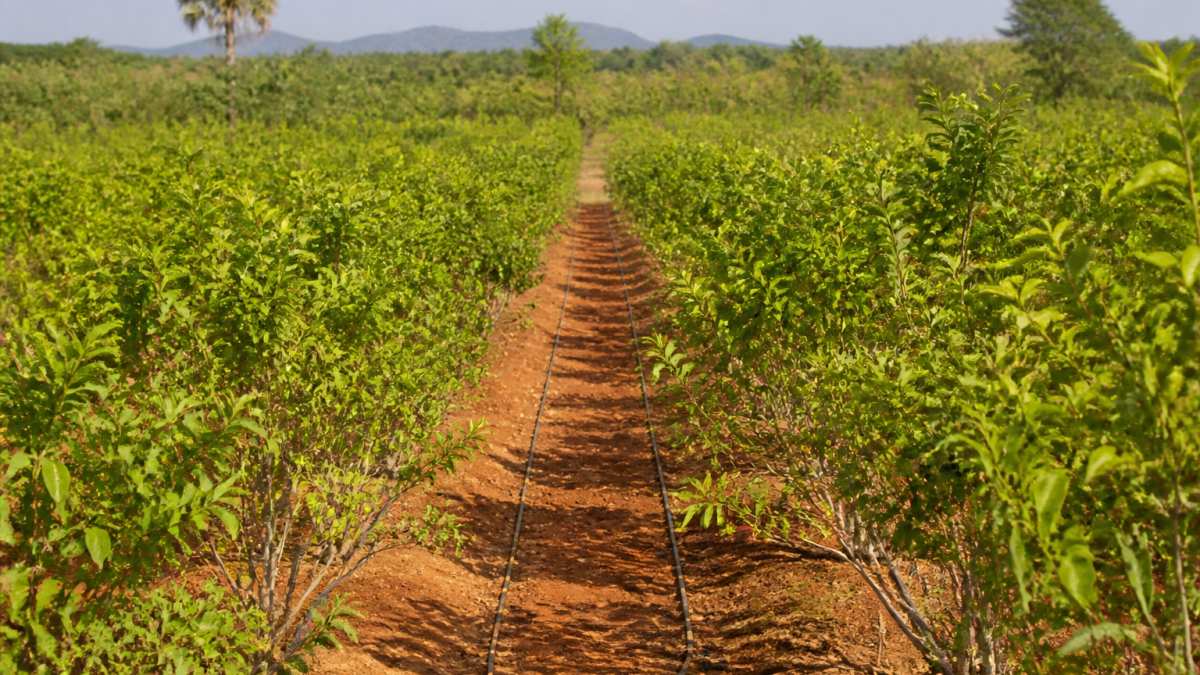
Karnataka offers diverse agricultural opportunities across coffee, coconut, and spice plantations. Tamil Nadu provides strong legal certainty for NRI purchases and established agricultural markets.
North India and Western Regions
North India presents opportunities in Punjab, Haryana, and Uttar Pradesh, though purchase restrictions are tighter. Punjab prohibits agricultural land sales to non-residents in most cases.
Western regions like Maharashtra and Gujarat offer more accessible frameworks. Maharashtra permits NRI agricultural land purchases, and the state has an active market for farmland and farmhouse plots. Gujarat similarly allows NRI ownership, particularly for plantation and horticultural land.
The geographic advantage of South India for NRI investors is clear: established legal frameworks, transparent registration systems, and proven agricultural viability. However, investment success depends far more on individual property verification than regional selection.
How to Verify Land Title in India: Essential Due Diligence
Title verification is where most NRI investors stumble. A property may appear available and affordable, but ownership disputes, pending litigation, or encumbrance claims can surface months after purchase.
Begin with the SRO (Sub-Registrar of Offices) records for the property's district.
Next, verify that no encumbrances, mortgages, or legal claims exist against the property. The SRO maintains an encumbrance certificate that lists all registered charges.
Conduct a physical inspection or hire a local surveyor to verify that the property's boundaries match the registered description. Disputes over land boundaries are common and expensive to resolve.
Finally, verify that the seller has clear authority to transfer the land. Learn comprehensive safety-focused strategies for NRI agricultural land investment decisions. For agricultural property, confirm that no agricultural land ceiling laws or tenant protections restrict the sale.
[LINK: Safest Agricultural Land Investment in India: 2026 Guide | page:2]
Agricultural Land Documents Checklist India
Before committing funds, verify that the seller can provide these documents:
- Registered deed from the SRO (Sub-Registrar of Offices) showing ownership for the past 12-13 years
- Current encumbrance certificate confirming no mortgages, liens, or legal claims
- Mutation records showing all ownership transfers in the SRO's official register
- Property survey report with boundary measurements and area confirmation
- Tax payment receipts (property tax or land revenue) for the past 3-5 years
- Proof of FEMA compliance if the current owner is an NRI or foreign entity
- Crop history or agricultural yield documentation (for farmland)
- Water rights documentation (crucial for irrigation-dependent land)
- Soil testing report confirming agricultural suitability
- No-objection certificate from local agricultural department (if required by state)
- Title insurance or title guarantee letter from a recognized title company
- Legal opinion from a state-licensed land attorney confirming clear title
[LINK: NRI checklist before a farmland enquiry | page:3]
Missing documents don't automatically disqualify a property, but they increase your risk. A seller unable or unwilling to provide basic documentation should be avoided. RedGoldAgro provides complete documentation for every investment unit, including registered patta land e-Stamp registration and Forest Department tagging for each of the 104 Red Sandalwood trees.
Managed Farmland Investment India: Passive Ownership Models
The traditional model of NRI agricultural land ownership, purchasing raw land, hiring a local manager, and managing operations remotely, carries operational complexity and hidden costs.
In a managed farmland model, the investor owns registered patta land and the trees or crops cultivated on it.
RedGoldAgro's Red Sandalwood farmland offering exemplifies this approach. Each investment includes 1,066 square yards of registered patta land with 104 Red Sandalwood trees.
The timeline for Red Sandalwood maturity typically ranges from 12-15 years. This extended horizon suits investors building legacy assets for retirement or family wealth transfer rather than seeking quick returns.
Comparing Platforms and Investment Options
The choice between raw land purchases, managed farmland, and online marketplace listings depends on your risk tolerance, capital availability, and involvement preference.
Raw land purchases offer maximum control and potential upside but require active management, local expertise, and significant due diligence. You own the land outright and can exit whenever you choose.
Managed farmland investments like RedGoldAgro's offering provide professional oversight, reduced operational burden, and transparent documentation.
Online marketplace listings (1acre, 2Bigha, Farmland Bazaar) connect buyers and sellers directly. You gain access to thousands of properties and can negotiate independently.
| Option | Control | Operational Burden | Due Diligence Required | Exit Flexibility | Best For |
|---|---|---|---|---|---|
| Raw land purchase | Maximum | High | Extensive | High | Investors with local expertise |
| Managed farmland | Limited | Minimal | Moderate | Low | Passive investors seeking simplicity |
| Marketplace listings | Maximum | High | Extensive | High | Investors with time and expertise |
Start Your Agricultural Land Investment Journey
The agricultural land market in India offers compelling opportunities for NRI wealth creation, but success requires clarity on legal frameworks, rigorous due diligence, and realistic return expectations. State-by-state purchase rules, title verification, and FEMA compliance are non-negotiable, overlooking any of these can result in costly disputes or frozen capital.
For investors seeking a hands-off approach with professional management and transparent documentation, managed farmland investments eliminate the operational complexity of remote ownership. Request the NRI Investment & Legacy Guide and explore managed Red Sandalwood farmland options. RedGoldAgro's Red Sandalwood farmland offering in Kanigiri combines registered patta land ownership, government-backed documentation, and a 60% timber yield share at maturity. Contact RedGoldAgro to discuss investment options and request a farm visit to Kanigiri, Andhra Pradesh.
[LINK: NRI Investment & Legacy Guide | page:4]
[LINK: Contact RedGoldAgro | page:5]
The path to agricultural land ownership in India is clearer today than ever before. Online marketplaces, transparent registration systems, and managed investment models have reduced friction for NRI investors. The remaining challenge is distinguishing between genuine opportunities and overpriced or legally compromised properties. Start with a clear investment thesis, then match it to the right ownership structure.
Frequently Asked Questions
Can NRIs legally own agricultural land for sale in India?
Yes, NRIs can own agricultural land in India under FEMA (Foreign Exchange Management Act) compliance rules. The Ministry of External Affairs permits PIOs (Persons of Indian Origin) and NRIs to purchase agricultural land and transfer it by sale or gift to a resident Indian citizen. However, purchase rules vary by state, so you must verify local regulations before committing. Each state maintains its own restrictions on land ownership, lease terms, and transfer eligibility. Consult a local legal advisor to confirm eligibility in your target state and ensure full compliance with state-level land-purchase laws.
What agricultural land documents checklist should I verify before purchasing in India?
Before purchasing, verify the patta (ownership deed), survey records, tax payment receipts, and Forest Department clearance if applicable. Request the encumbrance certificate to confirm no legal claims exist against the property. Check municipal records for any pending disputes or development restrictions. For managed farmland investments, obtain certified copies of all land titles, tree registration documents, and insurance policies. Ensure the seller provides original e-Stamp registrations and SRO (Sub-Registrar Office) certificates. Have a qualified surveyor measure the actual plot size to match the listed acreage, and obtain a soil and water quality report if crop suitability matters to your investment decision.
How do I verify land title and ownership in India from abroad?
Request the seller provide certified copies of the patta deed, encumbrance certificate, and property tax records from the local revenue office. Use online portals where available in your state to cross-check ownership records and tax history. Hire a local property surveyor or advocate to physically inspect the land, verify boundary markers, and confirm the seller's identity against government records. For managed farmland investments, verify that each tree is individually tagged and logged with the Forest Department, and confirm timber yield documentation. Request a title insurance policy or legal opinion letter from a registered advocate confirming clear ownership and no encumbrances. Many platforms like 1acre and 2Bigha provide map layers and verified listings that can help cross-reference location and property details.
What is managed farmland investment in India, and how does it work for NRIs?
Managed farmland investment allows NRIs to own agricultural land while a professional operator handles day-to-day management, irrigation, security, and maintenance. You retain full ownership of registered patta land and receive a share of timber yield or crop harvest at maturity. The operator provides 24/7 security, drip irrigation systems, and Forest Department compliance. This model suits busy expatriates who cannot physically manage land from abroad. Investments typically include detailed documentation of tree tagging, soil quality, and water availability. Returns depend on timber market prices and crop yields, so review historical pricing trends and maturity timelines before committing. FEMA compliance and full legal documentation ensure you can repatriate returns to your overseas bank account.
What makes Red Sandalwood farmland a strategic investment for NRIs?
Red Sandalwood is a high-value timber species with strong demand in pharmaceutical, cosmetic, and perfume industries. The timber yield share model allows investors to benefit from price appreciation without managing the harvest themselves. Each tree is individually registered with the Forest Department, ensuring transparent tracking and legal compliance. Mature Red Sandalwood commands premium prices, and global demand for sustainable timber is expected to grow significantly in coming years. Managed Red Sandalwood farmland provides a passive, long-term wealth-building asset backed by government documentation and professional management.
Download NRI Guide Add redgoldagro.com as a preferred source on Google →