Last Updated: November 1, 2026
Quick Summary
Red sandalwood cultivation requirements in India centre on deep, well-drained soil with a pH of roughly 6.0 to 7.5, a warm dry climate with 500 to 1,000 mm rainfall, spacing of 3 to 4 metres, and strict Forest Department permits and FEMA-compliant paperwork. Young trees need steady watering for the first two years, then deep, infrequent soaks.
- Aim for at least 1 meter of loose, fast-draining soil with no hardpan beneath it.
- Most plantations space trees 3 to 4 meters apart, giving roughly 600 to 1,100 trees per hectare.
- Water young trees every 5-7 days in dry months, never soaking the root zone.
- Confirm patta land registration, Forest Department tree tagging, and FEMA compliance before investing.
- Spike disease has no simple cure, so inspect regularly and remove infected trees promptly.
Table of Contents
- Why Red Sandalwood Cultivation Requirements Matter for NRI Investors
- Red Sandalwood Soil and Climate Requirements
- Red Sandalwood Tree Spacing and Irrigation
- Red Sandalwood Growth Period and Maturity
- Red Sandalwood Cultivation Legality and Permits
- Pest and Disease Management in Red Sandalwood Plantations
- Harvesting, Post-Harvest Handling, and Future Demand
- Download the NRI Guide to Managed Red Sandalwood Farmland
- Frequently Asked Questions
Why Red Sandalwood Cultivation Requirements Matter for NRI Investors
A market report from Mordor Intelligence's red sandalwood forecast values the red sandalwood market at USD 2.1 billion in 2025, with an estimate of USD 2.29 billion in 2026 and a forecast of USD 3.54 billion by 2031. That growth curve is why so many non-resident Indians are now asking about red sandalwood cultivation requirements in India before they commit capital. Once the requirements are clear, how to invest in red sandalwood farmland walks through the process step by step.
The short answer: red sandalwood is a slow, demanding tree. Get the soil, spacing, water, and paperwork right and it rewards patience. Get them wrong and you lose a decade.
Below, we break down each requirement in plain terms, from pH to permits, so you can judge a project on facts rather than brochures.
Red Sandalwood Soil and Climate Requirements
Red sandalwood needs deep, well-drained soil and a warm, dry climate. Waterlogged ground is the fastest way to kill a young plantation.
Soil Depth, Drainage, and pH
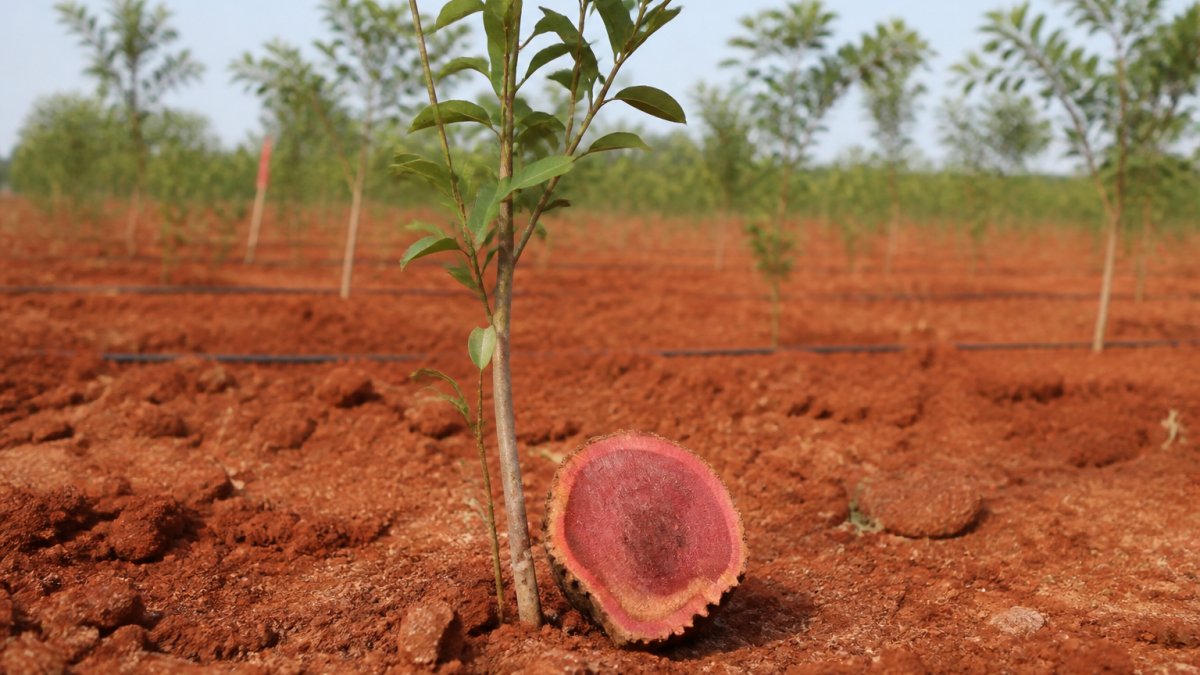
Aim for at least 1 meter of loose soil with no hardpan beneath it. Red sandalwood tolerates poor, gravelly earth better than heavy clay. Standing water suffocates the roots within days.
- Depth: 1 meter or more to bedrock
- Drainage: fast-draining, never waterlogged
- pH: mildly acidic to neutral, roughly 6.0 to 7.5
- Texture: red loam, gravelly loam, or sandy loam
Test pH before planting, since a simple soil test can save years of trouble.
Temperature and Rainfall
Warm conditions drive growth. Red sandalwood performs best where temperatures stay above 10°C (50°F) and summer heat reaches 35°C to 45°C.
Rainfall of 500 to 1,000 mm suits the tree, but the dry season matters just as much. A marked dry spell hardens the wood. Humidity and constant damp invite fungal problems.
Red Sandalwood Tree Spacing and Irrigation
Spacing and water are the two levers growers control most directly. Plant too tight and the trees compete. Irrigate too freely and the roots rot.
Planting Density and Drip Layout
Most plantations space red sandalwood 3 to 4 meters apart, giving roughly 600 to 1,100 trees per hectare. Wider spacing means more light per tree and easier machinery access.
Drip lines run along each row, with one or two emitters per tree. Drip saves water and keeps foliage dry, which lowers disease pressure.
Watering Schedule by Growth Stage
Young saplings need steady moisture for the first two years. After that, the tree tolerates dry spells well.
| Growth Stage | Watering Frequency | Notes |
|---|---|---|
| Year 1-2 (establishment) | Every 5-7 days in dry months | Keep root zone moist, never soaked |
| Year 3-5 (juvenile) | Every 10-14 days | Reduce in monsoon |
| Year 6+ (mature) | Every 2-3 weeks, dry season only | Deep, infrequent soak |
Watch out: overwatering young trees causes root rot faster than drought ever will. When in doubt, let the soil dry.
Red Sandalwood Growth Period and Maturity
Red sandalwood is a long-haul crop, and the prized deep red heartwood develops slowly with age. For a detailed breakdown of the timeline, read how long red sandalwood takes to mature.
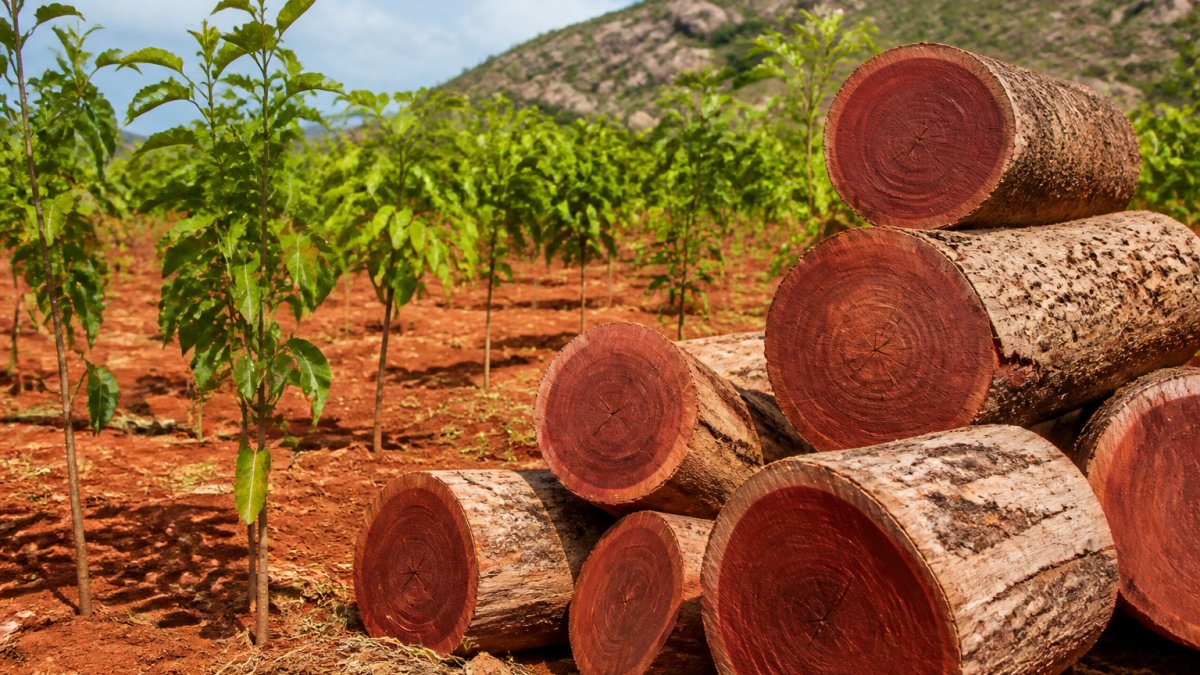
That timeline is the single biggest reason investors should treat this as a legacy asset, not a quick trade. The red heartwood that gives the tree its value forms in the center of the trunk over many years. Early harvest yields pale, low-grade wood.
Red Sandalwood Cultivation Legality and Permits
Legality is where many investors get caught out. Red sandalwood is a protected species, and its harvest, transport, and sale are tightly controlled.
Before any money moves, confirm three things:
- The land is registered patta land in the investor's name
- Every tree is tagged and logged with the Forest Department
- The ownership structure complies with FEMA rules for non-resident buyers
FEMA compliance is not optional for NRIs. Follow the FEMA guidelines for NRI land investment to get the ownership structure right. Getting it wrong can block repatriation of sale proceeds later.
Pest and Disease Management in Red Sandalwood Plantations
Red sandalwood faces real biological threats. A USDA Forest Service review of sandalwood in India identified fire, livestock browsing, spike disease, and smuggling as major pressures on the resource.
Spike disease, also called little leaf, is the most serious. It stunts growth and can spread through a plantation. There is no simple cure, so prevention and early removal of infected trees matter.
- Fire: maintain firebreaks and clear dry undergrowth
- Livestock: fence the perimeter and patrol regularly
- Spike disease: inspect regularly, remove infected trees promptly
- Smuggling: security and tagged trees help deter theft
Harvesting, Post-Harvest Handling, and Future Demand
Harvesting requires official permission, and the wood is graded on color, density, and heartwood content. The deep red heartwood commands the highest prices.
Post-harvest, the wood is seasoned slowly to prevent cracking, then graded and sold through licensed channels. Proper documentation at every stage protects the grower's legal title.
The demand picture looks strong. Down To Earth's reporting on the sandalwood comeback notes plantation expansion and relaxed state norms supporting supply. Combined with the Mordor Intelligence forecast of USD 3.54 billion by 2031, the long-term demand case is credible, though slow to mature.
Download the NRI Guide to Managed Red Sandalwood Farmland
Red sandalwood cultivation requirements in India reward investors who plan for decades, not quarters. Soil, water, spacing, security, and FEMA-compliant paperwork all have to line up.
RedGoldAgro manages each unit with 1,066 square yards of registered patta land and 104 tagged red sandalwood trees, backed by drip irrigation, 24/7 security, and a 60% timber yield share at maturity. Download the NRI Guide to see the full structure. You can also request the NRI Investment & Legacy Guide and explore the managed Red Sandal farmland offering.
Frequently Asked Questions
What climate is suitable for red sandalwood cultivation?
Red sandalwood grows best in tropical and subtropical climates with temperatures between 20°C and 40°C (68°F to 104°F) and annual rainfall of 500 to 1,000 mm. It tolerates dry spells once established but needs protection from frost and waterlogging. In India, the species is native to the dry deciduous forests of the Deccan plateau, including parts of Andhra Pradesh, where well-drained red soils and a distinct dry season support heartwood formation.
How long does red sandalwood take to mature?
Red sandalwood is a slow-growing species. The growth period and maturity timeline depend on soil quality, water management, and climate. Investors should plan for a long-term horizon and factor in maintenance costs over the full rotation.
Is red sandalwood cultivation legal, and what permits are required?
Yes, cultivation is legal in India, but harvesting, transport, and sale of red sandalwood are tightly regulated because the species is protected. Growers must obtain transit permits from the state forest department, maintain tree records, and follow state-specific rules. In Andhra Pradesh, plantations on patta land require registration and tagging of trees with the forest department before any harvest or transport.
What factors influence future demand for red sandalwood?
Future demand is driven by the wood's use in traditional medicine, cosmetics, and premium furniture, as well as its cultural and religious value. Demand for red sandalwood is expected to grow over the coming years. Supply remains constrained by slow growth and harvest regulations, which supports long-term price stability for legally sourced timber.
The real challenge is not finding land. It is finding a project where the paperwork, security, and long-term management hold up for 15 to 20 years. RedGoldAgro was built for exactly that: FEMA-compliant ownership, Forest Department-logged trees, and a fully managed plantation model with a 60% timber yield share at maturity. Get started with RedGoldAgro and build a legacy asset you can actually verify.
Download NRI Guide Add redgoldagro.com as a preferred source on Google →