Table of Contents
- How Timber Yield Investment Works for NRIs
- Red Sandalwood Maturity Period and Harvest Cycles
- What a 60/40 Timber Yield Share Actually Returns
- Timber Investment Due Diligence Checklist for NRIs
- Timberland Investment Risks Overseas Buyers Should Weigh
- Timber Investment vs. REITs: Liquidity, Yield, and Correlation
- Frequently Asked Questions
Last Updated: October 20, 2026
How Timber Yield Investment Works for NRIs
Timber yield investment for NRIs is a long-term arrangement in which an overseas investor funds the planting and management of trees and receives a share of the harvest proceeds at maturity. This guide from RedGoldAgro breaks down how the structure works, what it realistically returns, and where the risks sit. Most guides skip the parts that matter most: who holds title, what happens at harvest, and how money leaves the country afterward. Below, we walk through each of those.
Direct Ownership vs. Yield-Share Agreements
Two structures dominate. Direct ownership means your name sits on the land record, and you hold the trees growing on it. A yield-share agreement means you hold a contractual right to a percentage of harvest proceeds, not the land itself.
The difference is not academic. With direct ownership, you control the asset and can sell or bequeath it. With a yield-share, your protection is only as strong as the contract and the operator behind it.
FEMA Rules for NRI Farmland and Timber Assets
Non-Resident Indians face specific restrictions on agricultural land under the Foreign Exchange Management Act. The general rule: NRIs may not purchase agricultural land, farmland, or plantations without specific approval from the Reserve Bank of India.
There are narrow exceptions, including inheritance and certain permitted acquisitions. Because the rules are strict and penalties are severe, any timber offer pitched to NRIs should be built around a structure that complies from day one. Confirm the exact regulatory position with a qualified advisor before wiring funds, and check the RBI's foreign exchange guidance for non-residents for the current framework.
Red Sandalwood Maturity Period and Harvest Cycles
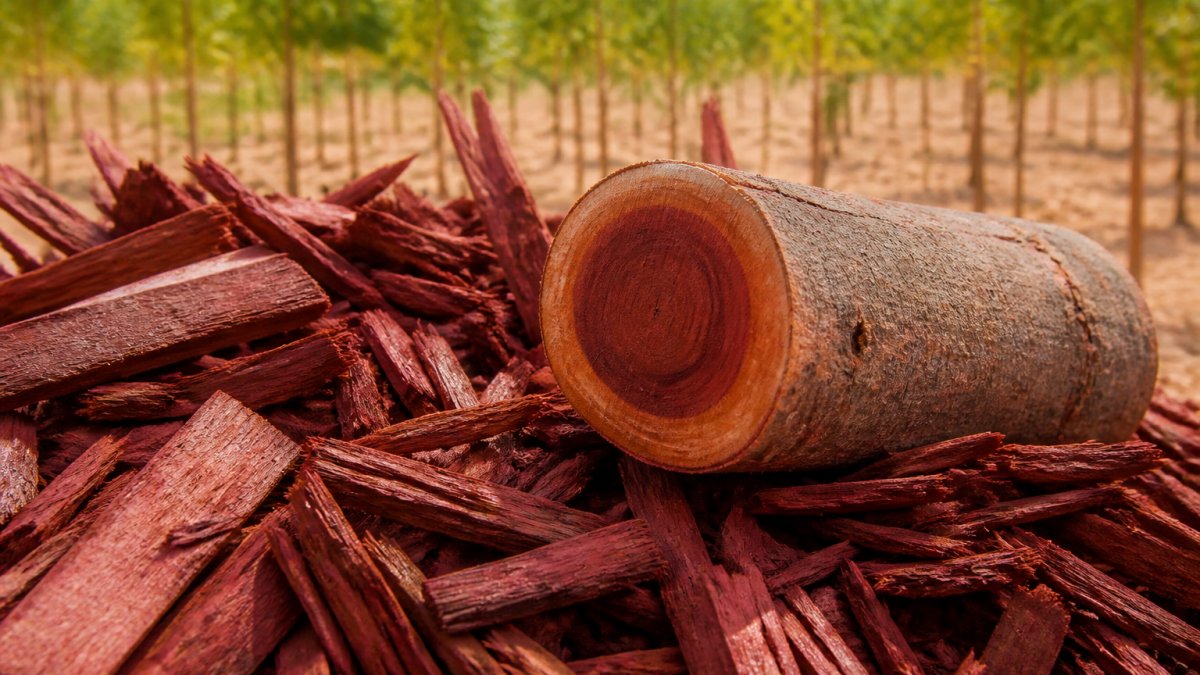
Red sandalwood matures slowly. Expect a 15-to-20-year horizon before a meaningful harvest, depending on site conditions and management intensity. That single fact reshapes every return calculation that follows.
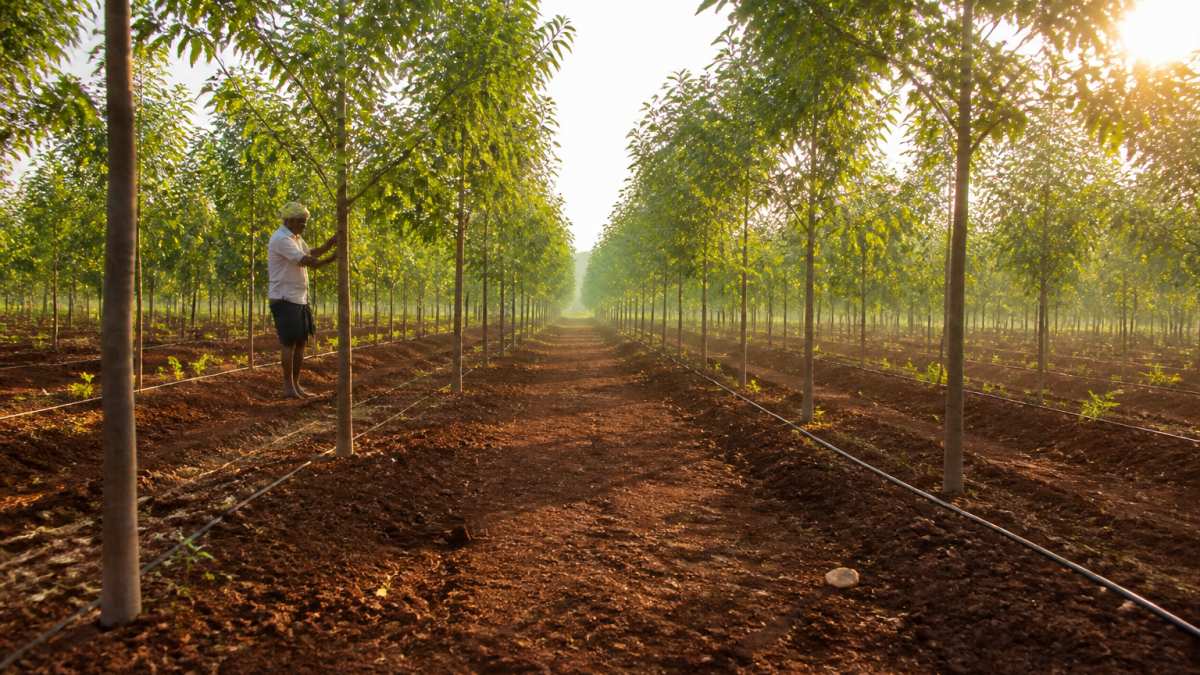
Harvesting is not a single event. It is a regulated process. Red sandalwood is a protected species, and felling, transport, and sale typically require forest department approvals and documented provenance. A well-run project tags and logs every tree so the harvest can be traced and cleared legally.
Watch Out The biggest mistake we see is treating the maturity date as fixed. Trees grow on biological time, not calendar time. If a project quotes you an exact harvest year with no allowance for delay, treat that as a warning sign.What a 60/40 Timber Yield Share Actually Returns
A 60/40 split means the investor receives 60% of harvest proceeds and the operator keeps 40% for land, labor, irrigation, security, and administration. On paper that sounds generous. In practice, the headline split tells you very little until you net it out.
Net Returns After Fees, Taxes, and Currency Conversion
Four deductions sit between the gross split and your bank account:
- Operator fees beyond the 40% share, if any are charged separately
- Harvest and transport costs, which can be substantial for regulated species
- Taxes on the income in the source country, plus any reporting obligation where you reside
- Currency conversion and repatriation costs when funds move back to your home account
| What You See | What It Means | What to Ask |
|---|---|---|
| "60% yield share" | Gross split of harvest proceeds | Is the 40% all-inclusive? |
| "Fully managed" | Operator handles maintenance | Are any costs billed separately? |
| "Government-backed documentation" | Registered land and logged trees | Can I see a sample deed? |
| "Repatriation support" | Help moving funds abroad | Which approvals are required? |
Pricing and projected returns depend on the specific unit, tree count, and harvest timing, so we do not quote figures publicly. Request current details directly from RedGoldAgro for accurate numbers.
Timber Investment Due Diligence Checklist for NRIs
Due diligence is where overseas buyers either protect themselves or lose money, and the distance between a legitimate timber yield offer and a fraudulent one is usually visible in the documents, if you know what to ask for. The checklist below is built for NRIs who cannot visit the site in person and must rely on paper, third-party verification, and the operator's willingness to be scrutinized.
Documents to Demand Before You Wire Funds
- Registered land deed or patta showing clear title, in the name of the entity that will hold the land
- Encumbrance certificate confirming no liens, mortgages, or pending claims
- Tree inventory with individual tags and forest department logging, cross-checked against the species and count in the offer
- Management agreement stating the exact revenue split, cost responsibilities, and what happens if the operator changes ownership
- Harvest and transport approval process, in writing, including which authority signs off and typical timelines
- Repatriation procedure with named approvals and the documentation package provided at harvest
- Corporate registration details, audited financials if available, and a track record you can verify independently
- Exit terms: can the unit be sold, to whom, at what notice, and how is the price determined
Fraud-Risk Checks Most Buyers Skip
A checklist of documents is necessary but not sufficient. Fraud in timber yield offers tends to show up in patterns rather than single red flags. Watch for these:
- Title held by an individual rather than the operating entity. If the land is in a promoter's personal name, your contract is with a company that does not own the asset.
- Tree counts that cannot be reconciled. Ask for the tagging methodology and a sample of tag numbers you can verify against forest department records. Vague answers on inventory are a warning sign.
- Guaranteed returns language. Timber is biological and regulated; no legitimate operator can guarantee a fixed return. Fixed-return promises are a classic fraud marker.
- Pressure to wire funds outside normal banking channels. Payments should go to a registered corporate account, with a receipt and a contract that matches the entity name.
- No independent valuation. A third-party valuation of the standing timber, even a simple one, separates serious operators from marketing operations.
- Reluctance to provide references from existing investors. Ask for two or three, and call them. A legitimate operator will have them.
Site Verification When You Cannot Visit
If you cannot inspect the site yourself, arrange an independent visit through a local agronomist, chartered accountant, or lawyer who is not connected to the operator. Ask for geo-tagged photos of the specific plot, not stock imagery, and compare the plot boundaries against the land deed. A modest verification fee is cheap relative to the capital at risk.
Key Takeaway The purpose of due diligence is not to find a reason to say no, it is to confirm that the operator's story survives contact with documents. If it does not, walk away before the wire, not after.Timberland Investment Risks Overseas Buyers Should Weigh
Timberland investment risks fall into four buckets: biological, regulatory, market, and operational. Biological risk covers fire, disease, and slower-than-expected growth. Regulatory risk covers harvest approvals and species protection rules. Market risk covers timber price swings at the point of sale. Operational risk covers mismanagement, encroachment, and security.
Currency risk deserves its own line. If you invest in rupees and the rupee weakens against the dollar, your dollar return shrinks even when the timber performs. There is rarely any hedging built into these structures, so plan for it.
No timber project eliminates risk. The question is whether the operator is transparent about which risks you carry and which they absorb.
Timber Investment vs. REITs: Liquidity, Yield, and Correlation
Timber investment and REITs serve different purposes. A REIT trades daily, pays distributions, and can be sold in seconds. Direct timber is illiquid, pays nothing until harvest, and may take years to exit. What direct timber offers instead is low correlation with stock markets, which is precisely why some portfolios hold both.
| Factor | Direct Timber | REIT |
|---|---|---|
| Liquidity | Low, years to exit | High, daily trading |
| Income timing | Lump sum at harvest | Regular distributions |
| Correlation with stocks | Generally low | Moderate to high |
| Minimum commitment | Larger, unit-based | Small, share-based |
| Management burden | Outsourced to operator | Handled by fund |
For investors who need access to capital, REITs win. For those building a long-horizon legacy asset, direct timber can play a diversification role that listed vehicles cannot replicate.
Frequently Asked Questions
How does a timber yield investment work for NRIs?
You buy a registered land unit planted with a set number of trees, and a manager handles irrigation, security, and harvesting. At harvest you receive an agreed share of the timber sale proceeds, typically split between you and the operator. In a 60/40 structure, the investor takes 60% of the timber yield at maturity. Confirm in writing who pays management costs, how the sale price is set, and when proceeds are remitted to your overseas account.
How long does red sandalwood take to mature for harvest?
Red sandalwood is a slow-growing hardwood, so plan for a multi-decade holding period rather than a short flip. Growth rates depend on soil, water, and management intensity, and harvest also requires Forest Department permissions because the species is protected. Ask the operator for the specific maturity assumption behind their projections and what happens to your share if trees mature later than scheduled.
What should NRIs check before investing in managed farmland?
Run a timber investment due diligence checklist: the patta land deed and e-stamp registration, encumbrance certificate, tree tagging and Forest Department logs, FEMA-compliant payment channels, the yield-share agreement, and a named exit mechanism. Verify the entity's corporate registration (CIN) and ask for proof of past harvest settlements. Visit or send a representative if you can, and have an independent Indian lawyer review the documents before wiring funds.
How do timber investments compare with REITs for overseas investors?
REITs trade daily, pay regular dividends, and are easy to exit, but they move with stock and property markets. Direct timberland is illiquid and produces income only at harvest, yet its returns historically show low or negative correlation with equities, which helps diversification. For NRIs, direct ownership also adds currency, repatriation, and documentation risk. Many portfolios hold both: REITs for liquidity, timberland for long-horizon growth.
Long-horizon timber investing demands patience and documentation in equal measure. RedGoldAgro structures each unit around registered patta land, individually tagged and forest-logged trees, and a 60/40 timber yield share at maturity, with FEMA-compliant ownership and full paperwork for repatriation. If you want to see exactly what you would hold, download the NRI guide and review the documentation before you commit.
Download NRI Guide